
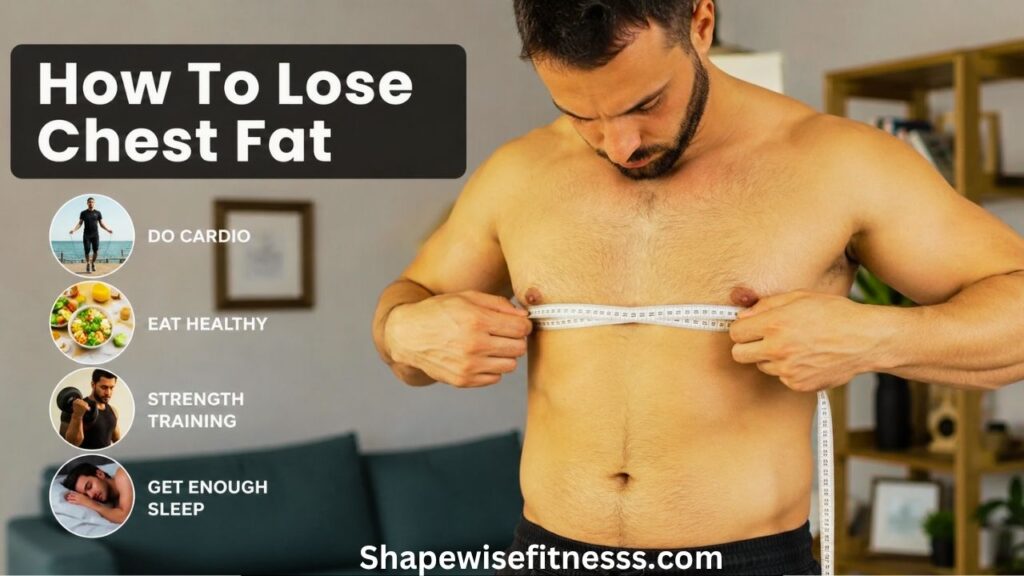
Weight loss from the chest area can be achieved through a variety of factors, including diet, exercise, and specific exercises. Your doctor can also provide you with tailored advice on effective methods.
It can be difficult to target chest fat, but with the right amount of exercise, a meal plan, and a bit of patience, you can get rid of the stubborn fat on your chest.
How to get rid of chest fat
The first step to losing chest fat is understanding how fat loss works in general. There is no way to eliminate chest fat without removing fat from other areas of your body.
According to the “Forbes equation,” in order to lose 1 pound of body fat, you must burn 3,500 Calories Trusted Source either through physical activity or through diet.
Since most people are on a diet of 1,800-3,000 calories a day, you should aim for a moderate daily calorie deficit. For instance, you should aim to consume 500-800 calories more than you consume each day.
If you had a daily calorie deficit of 500 calories, you could theoretically lose 1 pound a week. Over the course of 10 weeks, this would add up to 10 pounds. People who are most successful at weight loss and maintaining it lose weight gradually and maintain a healthy lifestyle, rather than resorting to crash diets.
How to create a caloric deficiency
One of the best ways to lose weight is to create a caloric deficit. A calorie deficit is when you eat less than your body’s capacity to burn or burn more than your body can consume.
For example, if you want to lose 1 pound of fat per week, you need to consume 3,500 Calories. If you want to lose 10 pounds of fat per 10 weeks, your caloric deficit will be 500 Calories per day.
Be careful not to starve yourself. Your body requires a certain number of calories to maintain muscle mass and basic bodily functions. This number is called your basal metabolic rate (BMR). For example, if your BMR is 1,500, you will need at least 1,500 calories to function normally with adequate energy. To have a healthy, long-term weight loss, you will need to add about 300 calories to your bmr, which is 1,800. Then you will need to burn at least 500 calories per day working out in order to reach this caloric deficit. By the end of your day, you should have consumed about 1,300 calories minus the total number of calories burned doing workouts.
The best combination of workouts for weight loss is strength training, steady cardio, and HIIT. With the right combination of workouts, careful calorie management, and commitment, you’ll start to see your fat melt away!
One of the best ways to lose weight is to create a caloric deficit. A calorie deficit is when you eat less than your body’s capacity to burn or burn more than your body can consume.
For example, if you want to lose 1 pound of fat per week, you need to consume 3,500 Calories. If you want to lose 10 pounds of fat per 10 weeks, your caloric deficit will be 500 Calories per day.
Be careful not to starve yourself. Your body requires a certain number of calories to maintain muscle mass and basic bodily functions. This number is called your basal metabolic rate (BMR). For example, if your BMR is 1,500, you will need at least 1,500 calories to function normally with adequate energy. To have a healthy, long-term weight loss, you will need to add about 300 calories to your bmr, which is 1,800. Then you will need to burn at least 500 calories per day working out in order to reach this caloric deficit. By the end of your day, you should have consumed about 1,300 calories minus the total number of calories burned doing workouts.
The best combination of workouts for weight loss is strength training, steady cardio, and HIIT. With the right combination of workouts, careful calorie management, and commitment, you’ll start to see your fat melt away!
BEST DIETS FOR CALORIE DEFICITS
There are a variety of diets that can help you lose weight and reach your calorie goal. Here are some of the most popular ones in recent years:

- A keto diet is a high-fat, high-protein diet that focuses on burning fat for energy instead of carbohydrates.
- The Paleo Diet is a way of eating that is similar to the way our ancestors ate in the past. It is a Paleolithic diet where grains, sugars and dairy are all eliminated.
- A plant-based diet is a diet that eliminates or minimizes animal products and high-fructose foods and concentrates on whole foods.
- Intermittent fasting is when you limit your calorie intake to a certain time of day and don’t eat anything outside of that time of day to help you lose weight.
No matter what diet you decide to follow, make sure you can stick to it. Look for a diet that has good advice that fits your lifestyle and makes you feel good about sticking to it. Don’t just go for the one that gives you the “fastest results”. Stick to it! The longer you stick with a diet, the more likely you are to lose the extra fat!
WEIGHT-BURNING EXERCISES FOR YOUR CHEST
Now that you’ve figured out how to make a calorie deficit, and you’ve got a few different recipes to experiment with, let’s look at some of the best exercises to help you lose weight on your chest.
PUSHUP
The pushup is one of the most effective ways to reduce chest fat. It can be done at any location and can always be made more difficult!

- Start with a high-body plank, making sure your neck, shoulder, hip, and ankle are all properly aligned.
- Get down on all fours and bend your elbows so that your forearms are pointing straight up.
- Keep your plank in place, lift your body off the ground and go back to the top
You can always make it harder by bringing your hands together, placing your feet on the chair, or going as slowly down and up as you can!
DUMBBELL PULLOVER
This is a great upper chest and upper back exercise that will build muscle and help burn fat, a great combo!

- Start on your back on the bench with your feet flat on the floor and your hips in a “bridge” position, holding your dumbbell overhead.
- Press down on the dumbbell and lower it over your head, keeping your elbows slightly bent.
- Once you have the dumbbell above your head, continue to squeeze and pull it back across your chest.
The key to this exercise is to make sure your chest stays in contact with the dumbbell throughout the entire movement.
CABLE CROSSOVER
One of the most popular cable chest exercises is the cable crossover. It targets the chest and shoulders, adding in some variety while also burning calories!

- Begin with your back to the machine, holding onto the handles
- Stand with your feet facing each other (one foot facing the other, approximately hip-width apart), your arms stretched out straight in front of you.
- With your elbows bent slightly, start by pressing your chest and moving your hands forward in front of you, crossing your arms one before the other in an x shape.
- Get back on your feet and slowly stretch your arms out to where your shoulders are parallel to each other.
Make sure you pick the right weight and don’t go too heavy, as this can increase the risk of shoulder damage.
BENCH PRESS
The bench press is a classic exercise that not only covers the full pec but also targets the inner chest. When you’re looking for an exercise that challenges your strength and builds muscle while also burning chest fat, the bench press is a great option.

- Start by positioning yourself on your back under the bar. Place your back on the bench with your core braced and your feet on the floor.
- Get your hands on the bar so that your arms are about shoulder width apart.
- Then lift the bar from the rack and place it in the middle of your chest.
- Then take a deep breath and bring the bar down to your chest.
- Then take a deep breath and pull the bar back from your body, putting it back on the rack.
The best way to do this is to have a spotter do it for you. If it’s too hard or you’re fatigued, a spotter will help you avoid serious injury. Another option is to do a chest press.
CARDIO
Cardio is the best way to build muscle and lose chest fat. It’s a combination of steady-state cardio for 20 minutes or more at a steady pace with strength training. Check out these cardio options!

Fast-paced walking is walking at a pace that you feel comfortable walking at.
Choose a Biking path that is safe to ride on a flat surface and where you’ll need to pedal more than just coasting.
Running If you’re looking for a place to run that’s a good mix of hills and flats, you’ll want to find an area that’s easy to run in and challenging to run in.
Swimming is a great all-encompassing, low-impact cardio exercise that can be done throughout the year.
Rowing machine is a full-body, high-intensity, high-cardiovascular exercise that if you are short on time will give you a great return on your investment!
Final Thoughts
Losing chest fat requires a combination of exercise, diet, and creating a caloric deficit. By following a balanced approach and incorporating targeted workouts, you can achieve your goal of reducing stubborn chest fat effectively.
FAQs
Q1: Can I specifically target chest fat for weight loss?
A: No, you can’t use chest fat specifically to lose weight. Fat loss happens all over the body when you run out of calories.
Q2: How do I create a calorie deficit?
A: A calorie deficit occurs when you eat less than the amount of calories your body is burning. A calorie deficit can be achieved through both diet and exercise.
Q3: How much of a calorie deficit do I need to create?
A: Try to eat 500-800 calories less each day. This will help you lose weight slowly and naturally.
Q4: Is it safe to starve myself to lose chest fat?
A: No, starving yourself to lose weight is not a good idea. Your body requires a certain amount of calories to function.
Q5: What is the best way to lose chest fat?
A: The key to losing chest fat is a balanced diet and exercise regime that minimizes your calorie intake. You can add specific chest exercises to your routine to tone and sculpt your chest.
Q6: How long will it take to lose chest fat?
A: The amount of time it will take to lose your chest fat will depend on a number of factors, including your initial weight loss, your eating habits, and your exercise routine. But with consistent practice and hard work, you should see results in a matter of weeks or months.