
Sitting for long hours is a normal part of an office job, but it can quietly damage your lower back. Poor posture, lack of movement, and constant screen time often lead to stiffness, pain, and discomfort. The good news is that you don’t need a gym or yoga mat to feel better. Simple lower back stretches done right at your desk can make a big difference.
In this article, you’ll learn safe, easy, and effective desk stretches that help relieve lower back pain, improve flexibility, and keep your body active during work hours.
Why Office Jobs Cause Lower Back Pain
Office work usually means sitting for 6–9 hours a day. When you sit too long:
- Your lower back muscles become tight
- Your hip flexors shorten
- Your core muscles weaken
- Your spine loses its natural alignment
Over time, this leads to poor posture, stiffness, and chronic lower back pain. Regular stretching during work hours helps counter these effects and keeps your spine healthy.
Benefits of Desk Stretches for Lower Back
Adding small stretch breaks to your workday can:
- Reduce lower back pain and stiffness
- Improve blood circulation
- Support better posture
- Increase focus and productivity
- Lower stress and muscle tension
Even 5 minutes of stretching every few hours can create noticeable improvements.
Office Job Lower Back Stretches You Can Do at Your Desk
1. Seated Spinal Twist
Sit upright with your feet flat on the floor. Place your right hand on the back of your chair and your left hand on your right knee. Slowly twist your upper body to the right while keeping your hips facing forward. Hold for 15–20 seconds, then switch sides.
Benefits: Relieves spinal tension and improves flexibility.
2. Seated Forward Fold

Sit at the edge of your chair and slowly bend forward, letting your chest rest on your thighs. Allow your arms and head to relax downward. Hold for 20–30 seconds while breathing deeply.
Benefits: Stretches the lower back and releases tight muscles.
3. Chair Back Extension
Place your hands on your lower back while seated. Gently lean backward over the chair, lifting your chest toward the ceiling. Hold for 10–15 seconds.
Benefits: Counteracts forward-leaning posture and supports spinal alignment.
4. Knee-to-Chest Stretch
While sitting, lift one knee and gently pull it toward your chest using both hands. Hold for 15–20 seconds, then switch legs.
Benefits: Relaxes lower back muscles and improves hip mobility.
5. Seated Cat-Cow Stretch
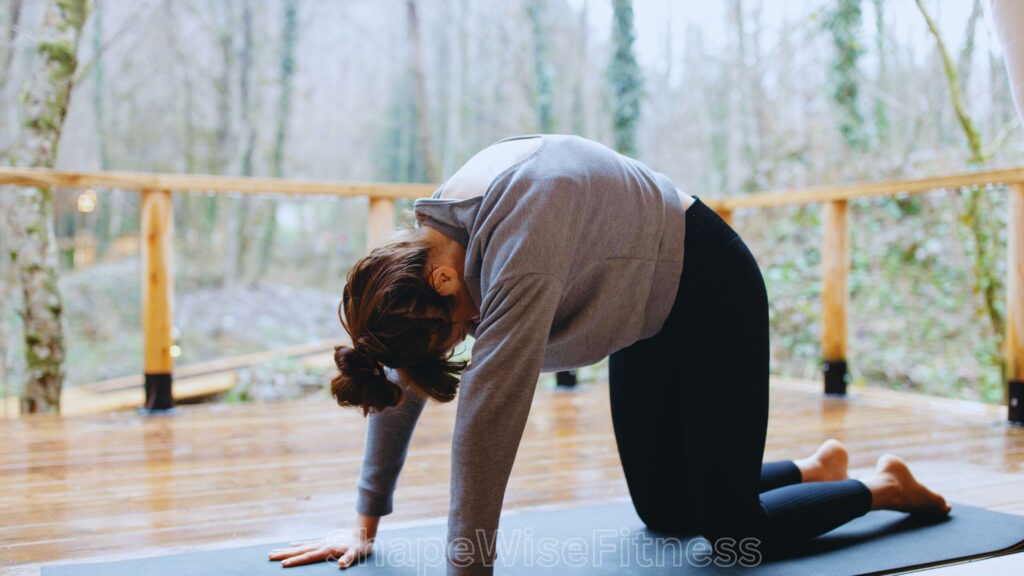
Sit upright with hands on your knees. Inhale and arch your back, lifting your chest (cow pose). Exhale and round your spine, tucking your chin (cat pose). Repeat 8–10 times.
Benefits: Improves spinal movement and reduces stiffness.
How Often Should You Stretch at Work?
For best results, try to stretch every 1–2 hours. You don’t need a full workout session. Just a few minutes of movement can protect your lower back and prevent long-term pain.

Experts recommend combining stretching with short walks and posture checks throughout the day.
Posture Tips to Protect Your Lower Back at the Desk
- Keep your feet flat on the floor
- Adjust your chair so knees are at hip level
- Sit with your back supported
- Keep your screen at eye level
- Avoid slouching or leaning forward
Good posture plus regular stretching is the best defense against office-related lower back pain.
What Experts Say About Sitting and Back Health
According to the Mayo Clinic, prolonged sitting increases pressure on spinal discs, leading to back pain. Regular movement and stretching are strongly recommended for office workers.
The Healthline also emphasizes that desk stretches can reduce muscle tightness and improve overall spinal health.
FAQs – Office Job Lower Back Stretches
1. Can desk stretches really reduce lower back pain?
Yes, regular desk stretches improve flexibility, reduce muscle tension, and help relieve lower back pain caused by prolonged sitting.
2. How long should I hold each stretch?
Most stretches should be held for 15–30 seconds while breathing slowly and comfortably.
3. Are these stretches safe to do daily?
Yes, these stretches are gentle and safe for daily use during office hours.
4. Do I need special equipment for desk stretches?
No equipment is required. A standard office chair and a little space are enough.
5. When should I see a doctor for back pain?
If your lower back pain is severe, persistent, or spreading to your legs, consult a medical professional.
Final Thoughts
Lower back pain doesn’t have to be part of your office job. Simple desk stretches, done consistently, can protect your spine, improve comfort, and boost your energy levels. Start small, stay consistent, and your back will thank you.